Nairobi, Kenya (PANA) – While Kenya has made significant progress in expanding access to education for refugees, opportunities for accredited post-secondary technical and vocational training remains limited for them around various settlement camps.
In the more remote region of West Pokot, the region’s proximity to Kakuma Refugee Camp in northern Kenya has enabled various organisations working on enhancing access to education for refugees to avail learning facilities for refugees.
One such non-governmental organisation is Global Give Back Circle that operates a programme known as HER Lab, which works to expand opportunities for young women who may otherwise have limited access to further education and skills development because of their refugee status.
“Although I have studied in Kenya for several years, my family’s journey began when my parents fled their home as refugees in search of safety and a better future,” said Kevine Muhimpundu, a refugee who has been engaged in a skills enhancement programme in Kajiado County, which borders Nairobi, the capital.
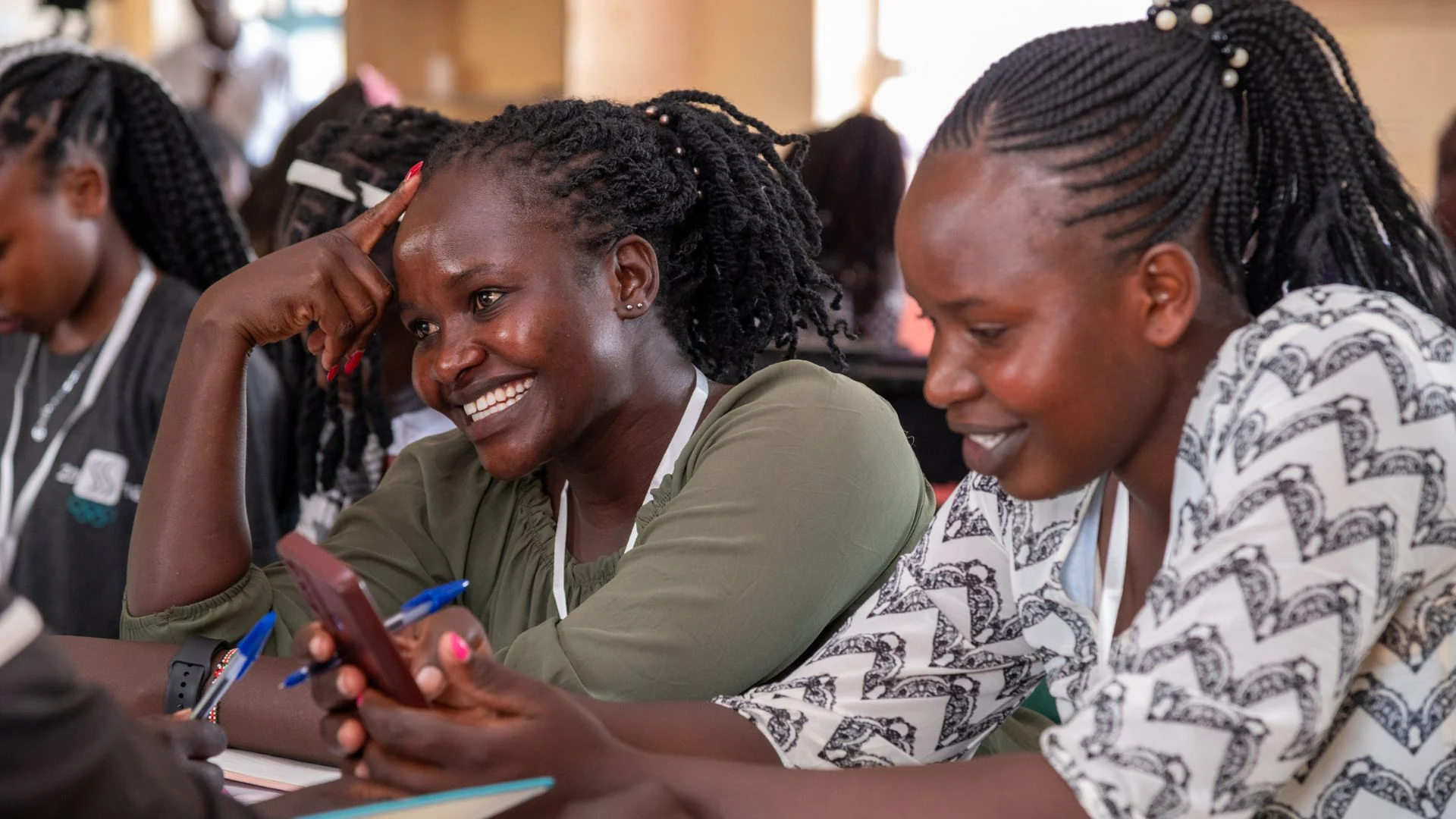
“I worked hard in school and performed well, but I was unable to continue my education because my family could not afford it. Today, as a student at Global Give Back Circle’s HER Lab programme, I am gaining practical skills, continuing my education, and building confidence in my future. I hope to become financially independent, support my family, and help create opportunities for other girls facing similar challenges, while contributing to the community I now call home,” said Muhimpundu, ICT participant at Global Give Back Circle’s HER Lab in Kajiado.
One of the defining features of HER Lab is its intentional commitment to inclusion.
From the outset, Global Give Back Circle and its partners set a target that at least five percent of participants would be refugees and a further five percent would be persons with disabilities, recognising that young women facing multiple and intersecting barriers are often the furthest from economic opportunity.
Through HER Lab, young refugee women learn alongside their Kenyan peers, pursue the same qualifications and work towards the same goal: skills, confidence and pathways to dignified and fulfilling work.
In HER Lab Kajiado, Global Give Back Circle has partnered with HELGA and Circle Group to enroll a significant group of young urban refugee women (19 of the 351 participants) from the Democratic Republic of Congo.
They are studying Electrical Installation Technology, ICT, Fashion & Design, Food & Beverage Production, Cosmetology and General Agriculture.
Their participation highlights the importance of ensuring refugee women are not excluded from technical training opportunities, including in fields that have traditionally been dominated by men.
HER Lab West Pokot, implemented in partnership with Perur Rays of Hope, includes refugee participants from South Sudan, Sudan, Rwanda and the Democratic Republic of Congo (14 of the 197 participants currently enrolled).
Many of these young women arrived in Kenya as children after being displaced by conflict and have spent most of their lives in or around Kakuma Refugee Camp.
Through the programme, participants access accredited technical training, mentorship, life skills development and pathways to employment and entrepreneurship alongside young women from host communities.
The inclusion of refugee participants reflects HER Lab’s broader commitment to ensuring that young women facing different forms of disadvantage are not left behind in efforts to expand economic opportunity and access to dignified and fulfilling work.
Dr Mwende Munuve, Chief Programme Officer at Global Give Back Circle said the World Refugee Day, marked on 20 June, 2026, was an opportunity to look beyond crisis and recognise the dream, ambition, talent and leadership of young women who have been displaced from their homes.
The participants joining HER Lab are not passive recipients of support; they are gifted students, future professionals, models, entrepreneurs and changemakers.
By giving them access to skills, mentorship and pathways to dignified work, we are tapping into their resilience and courage, ensuring that displacement does not limit their ability to shape their own futures and contribute meaningfully to society.”
Hellen Githakwa, Head of Impact and Youth Voice at Global Give Back Circle: “HER Lab was built on a simple but powerful idea: inclusion must be intentional. Young refugee women and young women with disabilities should not be left at the margins of skills development and economic opportunity. When they learn alongside their peers, gain marketrelevant training and receive the support to pursue employment or entrepreneurship, they are not only changing their own lives; they are strengthening families, communities and the wider economy.”
“For a long time, people expected my story to be defined by what I had lost. But I am learning to focus on what I can still build. I am gaining practical skills, growing in confidence, and working towards a future where I can support myself, help my family, and contribute to the economy of the community I now call home. I want other girls in the refugee camp to know that displacement does not have to decide the rest of their lives,” says Monica Abul, Fashion Design participant at Global Give Back Circle’s HER Lab in West.
PANA AO/MA 26June2026